
meaning
(particle) [after phrase or at sentence start] too, also, as well, additionally
see also
semantic space · lipamanka
kin is in almost all usage close to "also." kin is almost always used as a modifier. Instead of modifying the semantic space of the word it follows, it clarifies the relationship between that word and other ideas that could occupy the same position in the sentence. So if it modifies a subject, it means there are other things that do the same action. If it modifies a verb, it means there are other actions done by the same subject. If it modifies an object, it means that there are other things the action is done to. While some speakers may assume that the use of "kin" requires these other things to be mentioned, this is not necessarily the case. necessarily
Many people also use "kin" at the end (or, less commonly, the beginning) to modify the whole sentence, similar to the English word "also." kin generally lacks a noun or transitive meaning for most speakers. If it is used in these positions, it may be similar to "alsoness" and "to make something also."
kin may also be used to mean "extra." For example, "sona kin li wile" could mean "extra knowledge is required," in the sense that it's known that there is already other knowledge, but the knowledge that is needed is "also." This usage is less common, and many speakers prefer namako for this meaning.
pu definition
- PARTICLE (emphasis, emotion or confirmation)
ku translations
also79 too73 especially25 indeed25
usage
common · 86% usage
found in ku suli
coined pre-pu · 2001
origin
coined by jan Sonja
listen
kala Asi
jan Lakuse
commentary
In common usage (both before and after pu), "a" and "kin" are separate words, each with their own meaning. In pu, they are considered synonyms.
Underwent significant changes in usage in 2002, alongside "en" and (now obsolete) "kan".
sitelen pona
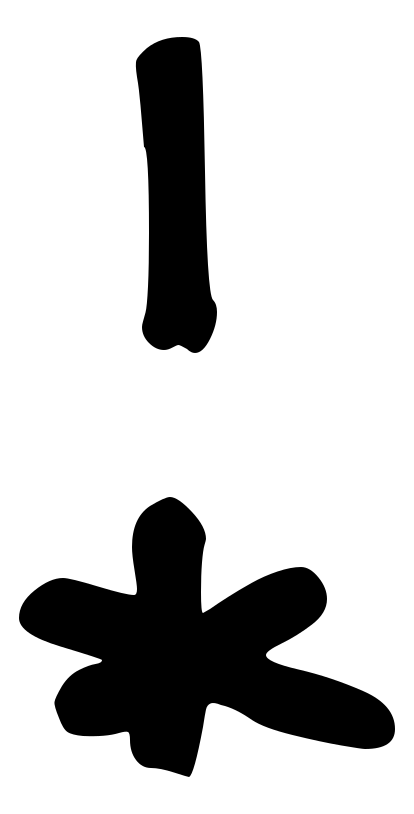
by jan Same
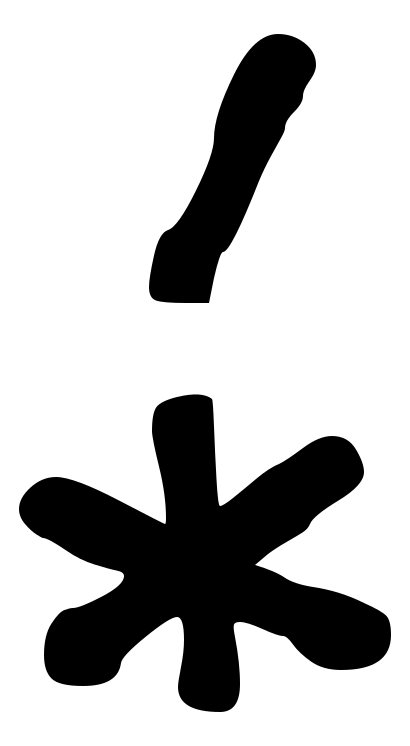
This is likely not the earliest instance of this glyph, but there is no known earlier one.
by jan Lepeka
sitelen sitelen
sitelen jelo
*️⃣
sitelen Emosi
❕
ucsur
U+F1979